Part 2: Driving to the Edge of the Map – One Couple's Tuktoyaktuk Road Trip Story
April 9, 2026
/
Rebecca Casey
.png)
Jacqueline's mother used to say Tuktoyaktuk the way most people say Timbuktu –
Shorthand for somewhere impossibly far away.
As a kid, Jacqueline didn't know it was a real place – an Inuvialuktun word, a real community, at the literal edge of the continent. It just sounded like the farthest away a place could be. But it stuck. The way certain things do.
Decades passed. Careers were built. A business, then another. Kids grew up and moved out. And somewhere in the middle of it all, the idea of actually going to Tuktoyaktuk quietly took shape. Not as an active plan, but as something she and Neil kept returning to. A trip they'd take when the time was right.
The time got right in the summer of 2025, when the last of it – the companies, the handoffs, the obligations – was finally done. The van had been ready for three years. The route had been thought through even longer than that. All that was left was to go.
So they did.
Enjoying the Ride is the Trip
They left Kimberley in the middle of August, just the two of them, pointing north toward Prince George on a rainy day one. By day three, with the rain gone, they were winding into Hyder, Alaska – a tiny community tucked into the Alaskan Panhandle, accessible through Stewart, BC with no formal border crossing – to watch grizzly bears fish for salmon.
Entry to the Fish Creek Wildlife Observation Site cost them twenty dollars each. Canadian, as it turns out – despite being on American soil, Hyder runs almost entirely on Canadian currency.
.jpg)
"It was like saving three thousand dollars a day," Jacqueline laughed, comparing it to the big-ticket bear excursions in Alaska. They were on a protected boardwalk, bears moving through the water as close as the length of the van. They heard them snort. They heard them breathe. They heard the pop and the wet squirt of salmon eggs when a bear bit into its catch.
They came back twice a day, every day they were there.
From Hyder, they drove up toward the Salmon Glacier – a road Jacqueline described as "sporty," which is a generous word for a narrow cliff-edge track with a glacier spreading out below you like a slow grey highway. They camped two nights out there: one above it, and one down at the toe where the meltwater runs cold and clear into the valley.

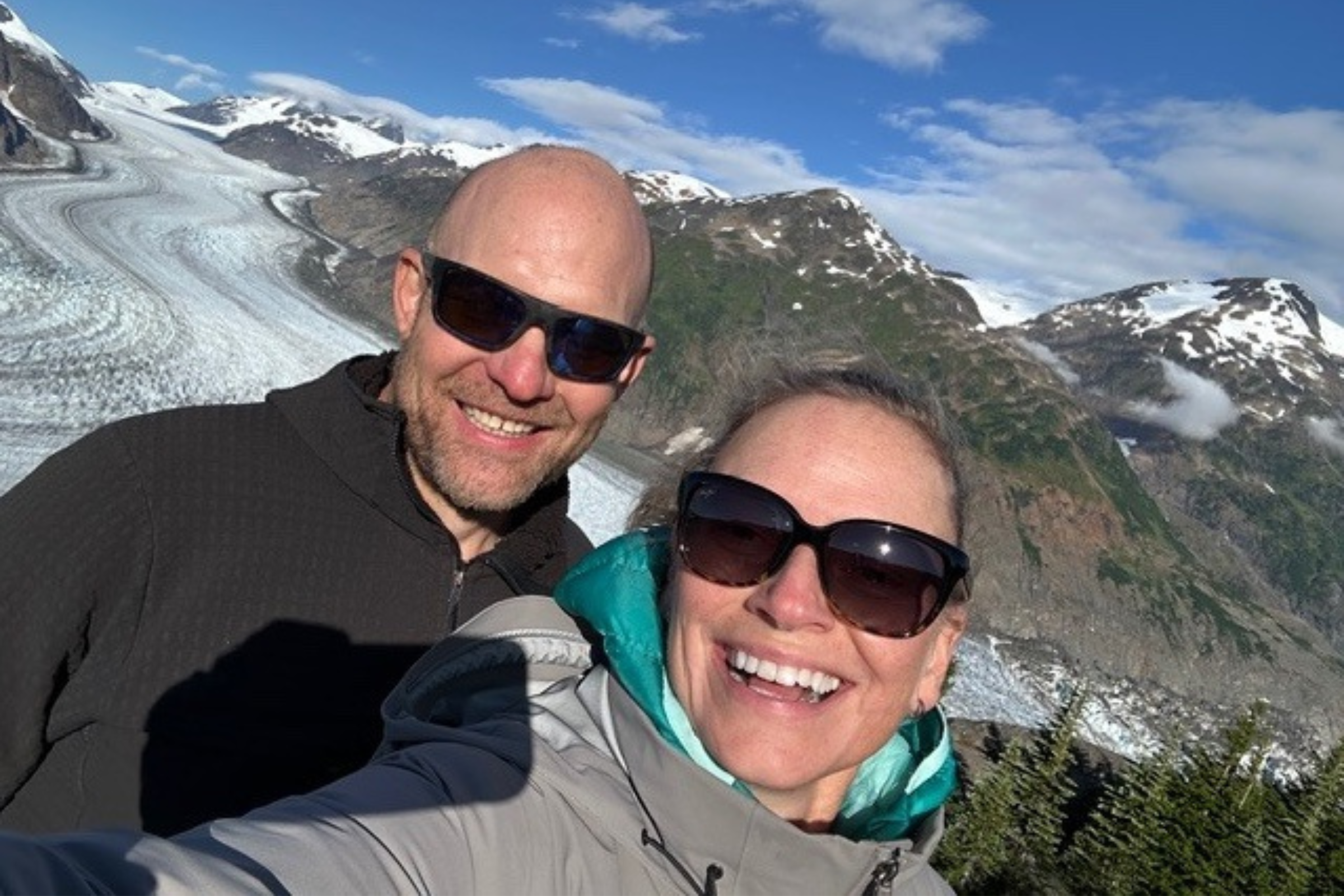
"That was exactly why we got this van," she said. No booking hotels. No booking campsites. No checking in or checking out." On a Sprinter van road trip across Canada's northwest, that kind of freedom isn't a luxury – it's the whole point.
Into the Yukon
They met up with friends in Whitehorse, and from there the route fell into familiar hands. One of their friends had done the Dempster before, on a motorbike, years ago before the road reached all the way to Tuk. He had the mileages mapped, the ferry times noted, and the good camp spots marked. Jacqueline was happy to let someone else carry that weight for a while.
.jpeg)
But before the Dempster was Kluane.
Kluane National Park sits in the southwest corner of the Yukon, bordering a federal park in Alaska and another reaching down into BC – three protected areas forming one of the largest non-polar ice fields and wilderness complexes in the world. The advice they'd been given was consistent: if the weather is good, book a scenic flight over Kluane National Park. Don't hesitate.
The weather was exceptional.
"The pilot said he'd never had a day like it," Jacqueline said. Usually something is obscured – clouds sitting low on a ridge, haze filling a valley. Not that day. They circled Mount Logan, Canada's highest peak – and the namesake of our own Logan model. They tracked glaciers 120 km long that looked, from the air, like highways vanishing into the distance. Denali appeared on the horizon, visible from the Yukon side, which the pilot said he'd never seen before.
"To see something that pristine and that ancient and that massive is something," she said, and left it at that. If you're planning a trip through the Yukon, her advice on a Kluane National Park scenic flight is simple: save every dollar you can and put it toward flight time. Get as much as you can afford. It will be the best money you spend on the entire trip.
From Kluane, they continued north toward Dawson City, stopping to hike at Tombstone Territorial Park – the so-called Patagonia of Canada, where red rolling hills give way to tall grey spires that seem to appear out of nowhere. They climbed the ridge to Grizzly Lake and looked out over the mountains, earning that view with their own legs.
"If you're going to the Yukon and don't go to Tombstone, it's a bad decision," she said. "You'll want to go back anyway." For anyone planning an Arctic road trip through Canada, Tombstone is not an option – it's a destination in its own right.

.jpg)
The Dempster Highway
The Dempster Highway begins just outside Dawson City, and it announces itself immediately. Within the first 200 meters, a rock kicked up by their friends' truck cracked straight into their windshield. A souvenir from kilometer zero – and as it turned out, the trip's only real hiccup.
Once you're on the Dempster, you're on it with purpose. It's 740 km of mostly gravel, stretching north from Dawson City to Inuvik, and, via the all-season Inuvik to Tuktoyaktuk Highway, all the way to the Arctic Ocean.There's almost no one on it who isn't either driving it to see it or driving it to get home. They saw the same cluster of six or seven vehicles all the way up, and all the way back down. The route crosses two ferry crossings, the Peel River and the Red Arctic River, before reaching Inuvik.
What people who haven't driven the Dempster Highway often wonder is whether the road itself is worth it. Whether 740 km of gravel is something to ensue or something to experience. For Jacqueline and Neil, there was no question. The landscape kept shifting. Rocky mountains gave way to mountains that looked like enormous gravel piles, then to something softer, sandier – a different kind of vast. Jacqueline kept reaching for the word and kept landing on the same one.
"I feel like I just keep saying vast," she said. "But that's all it was. Just – vast."
This was also where the wildlife appeared in full. Grizzly bears beside the road. Grizzly bears on the road. Moose. Various birds. And then, one afternoon, a black wolf moving through the brush. Jacqueline glimpsed it from the passenger seat and wasn't sure she'd actually seen what she thought she'd seen. Neil turned the van around. They waited. The wolf walked out in front of them and stayed for fifteen or twenty minutes.
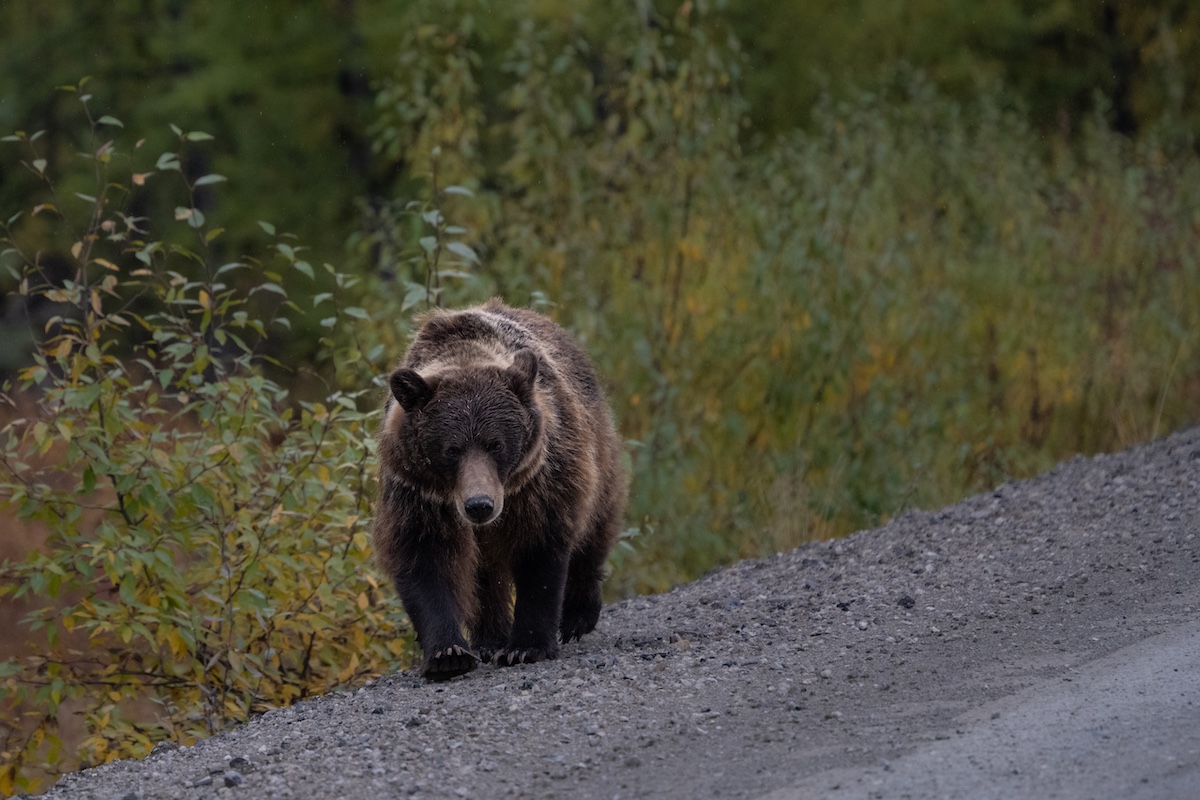
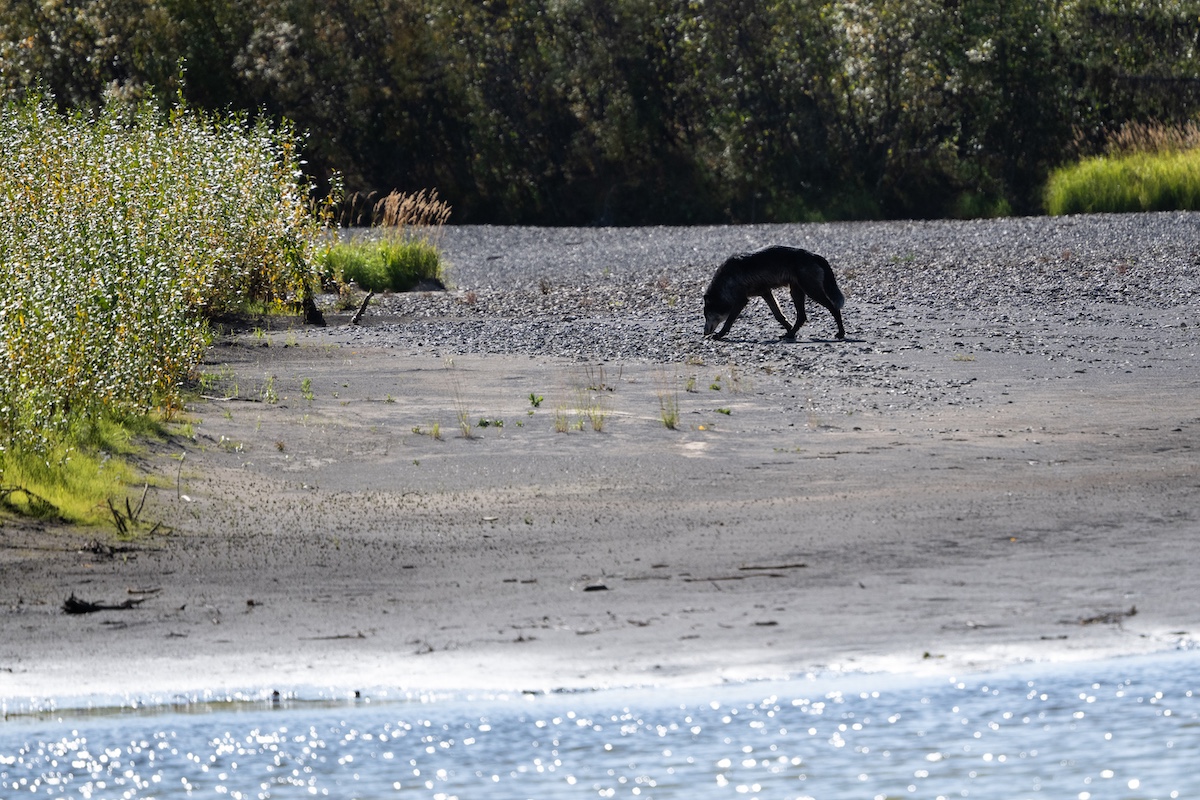
Jacqueline is an accomplished photographer, and it shows in the images throughout this post – but she'll tell you that no photo quite captures what it felt like to be there. She has video of it, standing in the gravel, unhurried. The day before, she'd said out loud that she hoped they'd see a wolf. Sometimes the North just listens.
Tuktoyaktuk
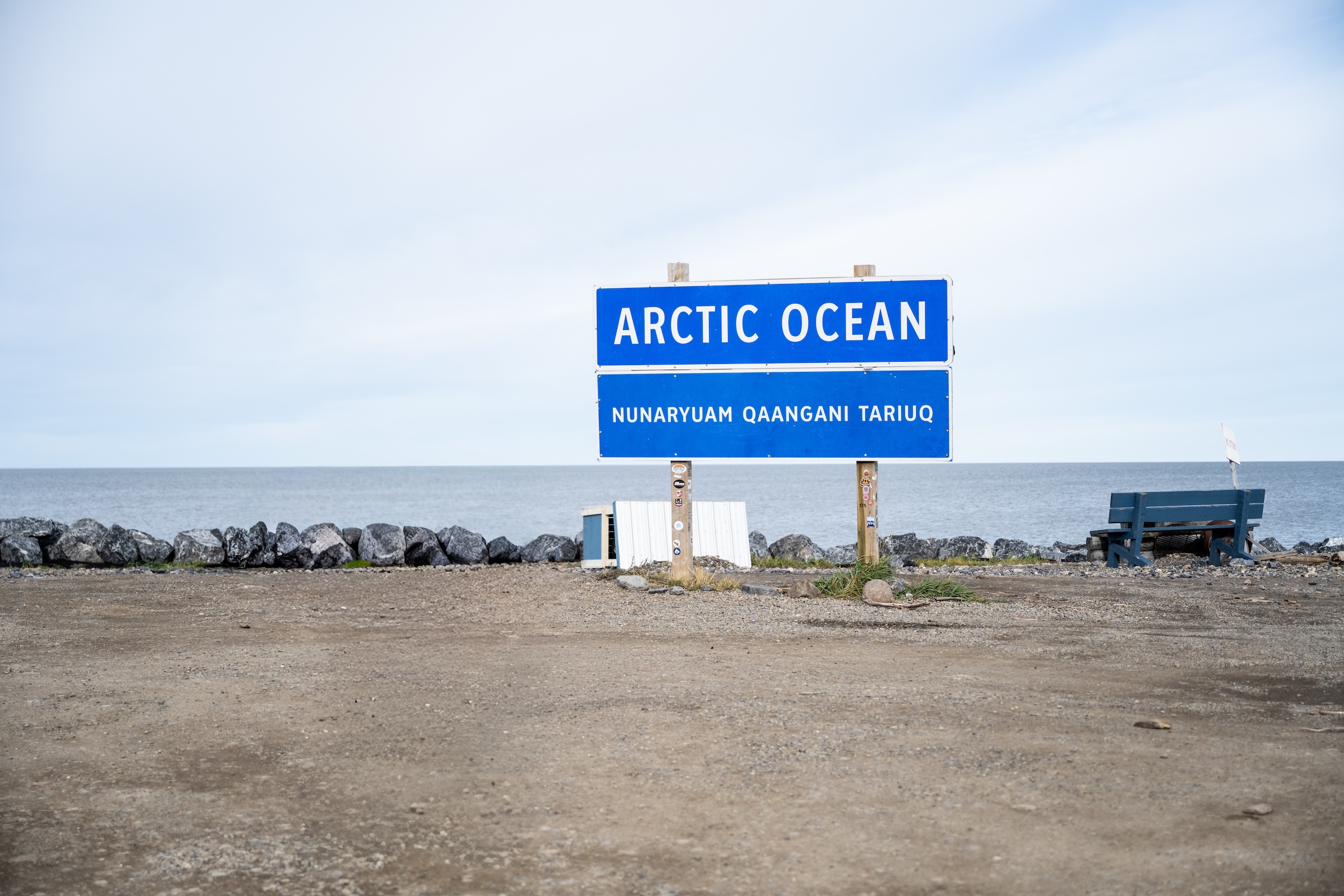
Tuktoyaktuk itself is a small, remote Inuvialuit community of roughly 900 people at the edge of the Arctic Ocean. There's a small airport, some industrial infrastructure for workers, not much else built for visitors. Jacqueline is honest about it: in the conventional tourism sense, there's no particular reason to go, if you're not from there.
But they had been talking about going for 10 years.
Is Tuktoyaktuk worth visiting? That depends entirely on what you're looking for. If you're after restaurants and resorts, that's not it. If you've spent a decade holding onto the idea of standing at the end of a road that reaches all the way to the Arctic Ocean, it's everything.
They walked to the water. They dipped their toes in the Arctic Ocean. They stood at the end of a very long road and were actually, finally there.
"We did it," she said. "We'd been talking about it for ten years, and we were actually there."
That was enough.
The Way Back
They retraced the Dempster Highway south, but it didn't feel like the same road. The colours had deepened in the weeks they'd been gone – the kind of change that happens slowly then all at once. What had been green on the way up was gold and amber on the way down. Even a road you've already driven can feel completely new when the season has shifted beneath it.
It was on this stretch that their friends mentioned a road they'd heard about but never driven. They got on it and didn't speak much for a while.
Jacqueline won't say the name publicly. She'd tell you in person if you were planning the trip, but she won't broadcast it. What she will say is that it is the most beautiful road she's ever driven, and she's driven some beautiful roads. She'd go back just to drive it again.
From Whitehorse, they deliberately chose a different route home rather than retrace their steps, looping back through roads they hadn't seen. On the Alaska Highway toward Fort St. John, the wildlife kept coming. Three or four herds of bison, right on the road – close enough to reach out and touch. Nine black bears in under ninety minutes, including a mother with three cubs. Caribou. Moose. The animals were everywhere, completely indifferent to the van rolling through.

What Stays
Jacqueline said one of the things that surprised her most was how quickly life in the van became its own rhythm – how two people in a small space, one of them six-foot-four, found their choreography. Every morning a kind of dance: you go here for this, I'll grab that, we meet in the middle, and we're out the door.
They built their Yama Van with this trip in mind. That's what a purpose-built Sprinter van makes possible on a trip like this. Not just the logistics of sleeping somewhere new every night, but the deeper thing: the freedom to stay when a place deserves more time, to leave when the road is calling, and to move through one of the most remote road trip routes in North America entirely on your own terms.
.jpg)
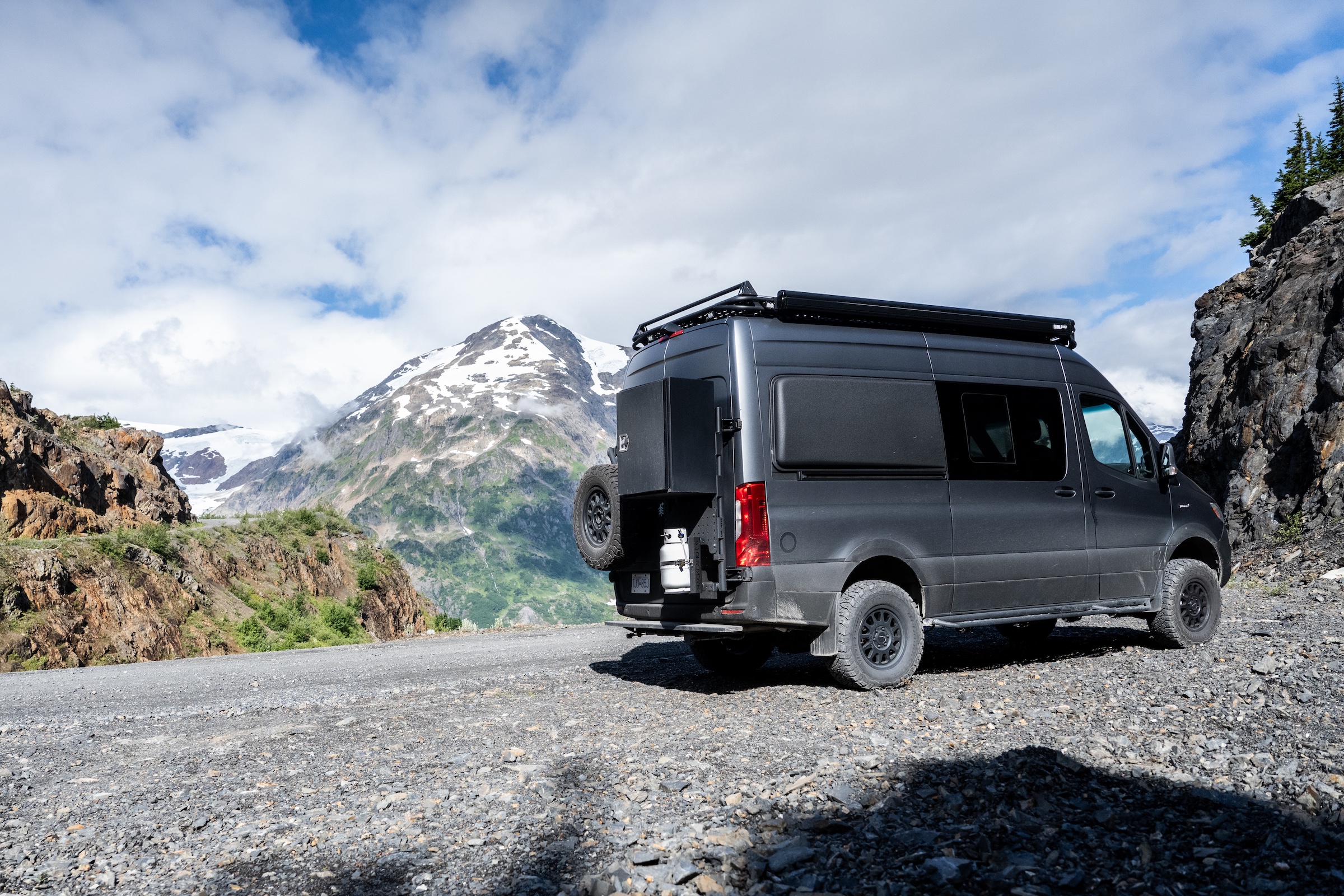
Some trips live in your head years before they happen. The van is what makes them stop being an idea and start being a plan. For Jacqueline and Neil, it was the thing that turned a decade of "someday" into thirty days of actually being there. Unhurried, self-sufficient, and completely free to enjoy the ride.
Planning your own drive to Tuktoyaktuk? Read part one of this series for a practical guide to the Dempster Highway – from route strategy and timing to van prep and what to pack.
All photographs courtesy of Jacqueline Sinclair.
.jpeg)
Rebecca Casey
Marketing & Events Specialist at Yama Vans


.png)