Chasing Powder Through the Rockies: Six Weeks Across Western Canada
February 26, 2026
/
Rebecca Casey
.avif)
.avif)
Six weeks. No fixed plan.
Just a departure date, a board bag in the back, and a van pointed west from Winnipeg.
No itinerary to defend and no reservations to protect. Only one immovable date on the calendar: Christmas in Nanaimo. Beyond that, just a loose sense of when he'd eventually make it back east.
"I had no real plan," Scott told us. "It was just me and the van, going wherever it made sense to go."
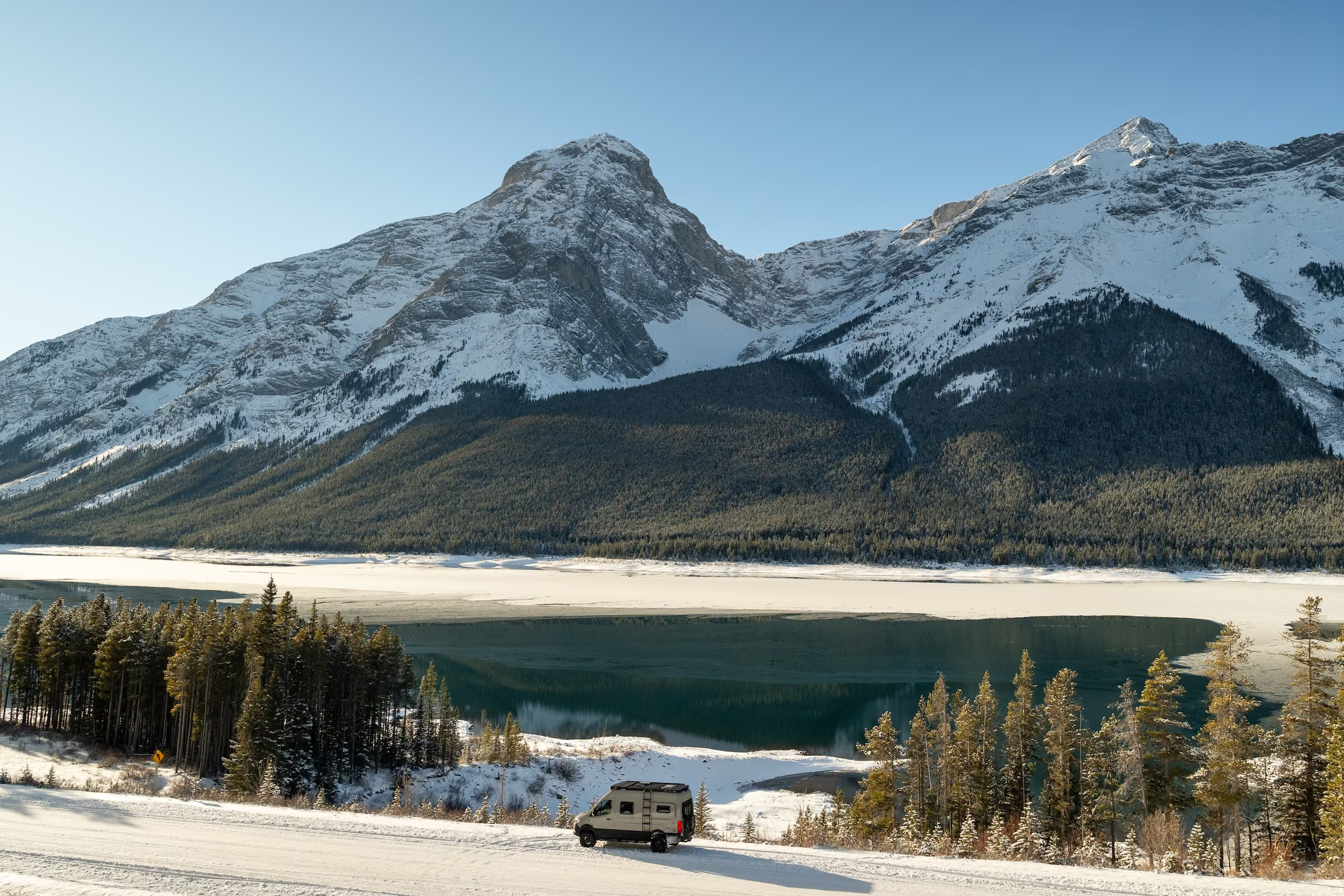
He wasn't chasing a checklist. He was chasing snow, tracking pressure drops through the Rockies and timing mountain passes between fronts. When the road quite literally ran out, he boarded a ferry and discovered that yes – there was snow waiting on Vancouver Island, too, if you knew where to look.
In winter, flexibility isn’t indulgent. It’s strategy. And when your basecamp moves with you, conditions, not commitments, set the pace.
Is Winter Van Travel in the Canadian Rockies Realistic?
Yes, with the right preparation, winter van travel in Western Canada is not only realistic, it’s strategic for skiers and boarders chasing storm cycles.
The drive across the prairies was brutally cold. Temperatures dipped to -40°C as Scott headed west, the kind of cold that makes you stretch a tank of fuel farther than you should just to avoid stepping outside. Out there, winter feels steady and unchanging.
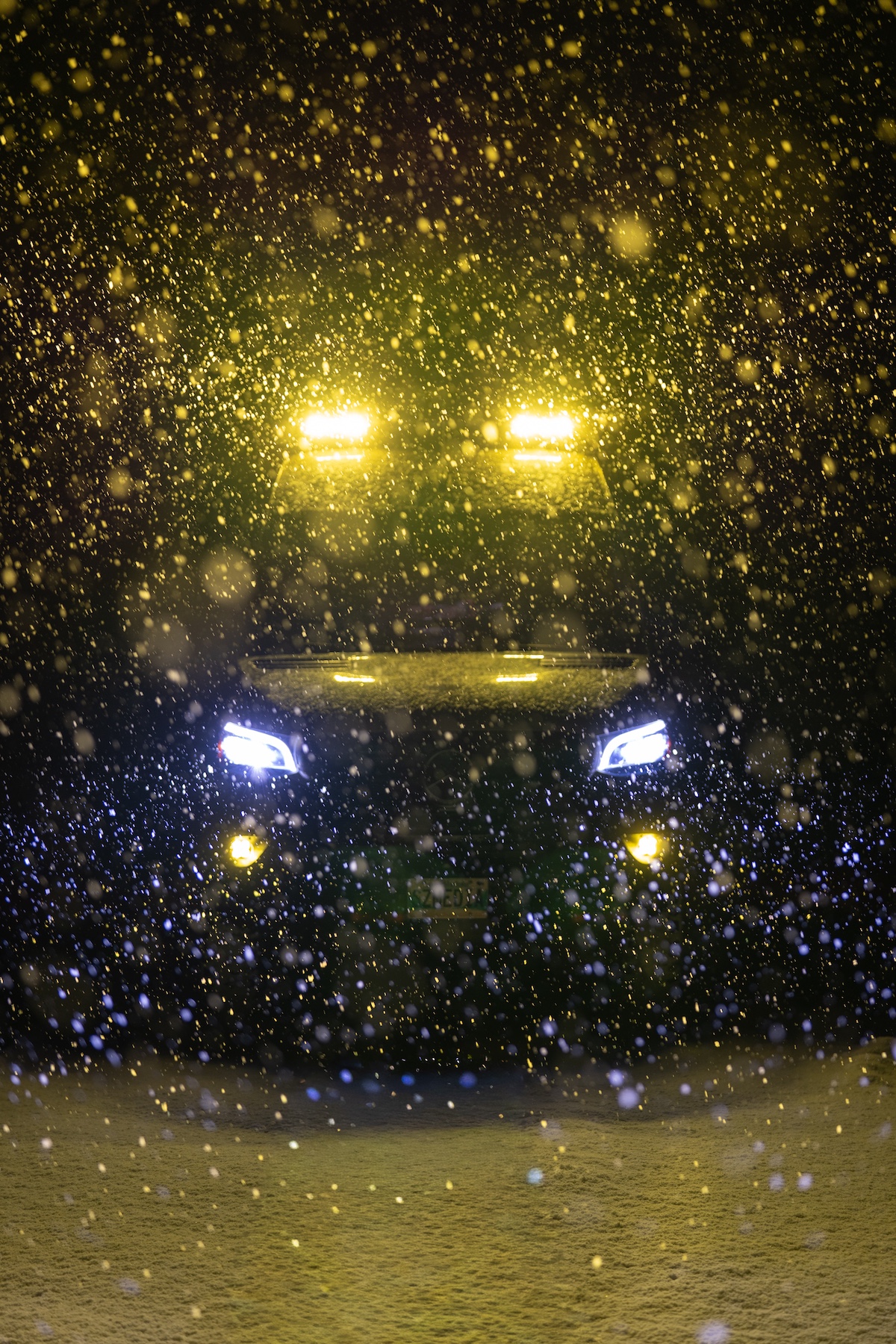
The mountains are different. Scott was boondocked in Kananskis the night the first storm hit. Inside the van, it felt like any other evening: Starlink humming, music low, a candle lit, window covers in place. It was cozy and contained, removed from the chaos building outside.
“I really was not aware of how much it was snowing,” he said. “But I could hear snow sliding off the side of the van.”
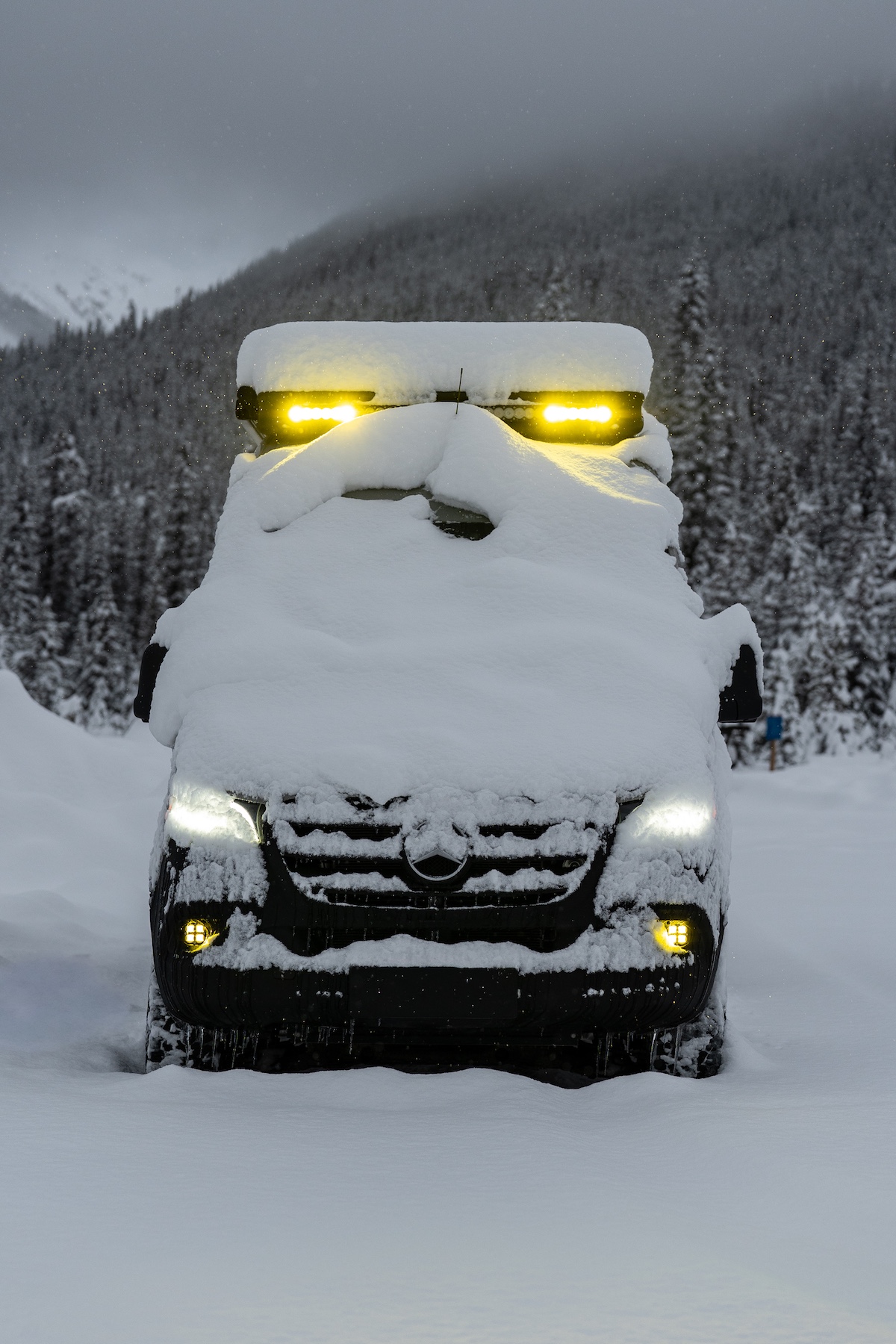
When he opened the door a few hours later, nearly two feet had stacked around him. The photos speak for themselves. Scott is a professional photographer, and when the mountains deliver like that, you don’t stay inside. You grab your camera and step into it.
Resort Riding In the Canadian Rockies
Skiing Sunshine Village After a Storm
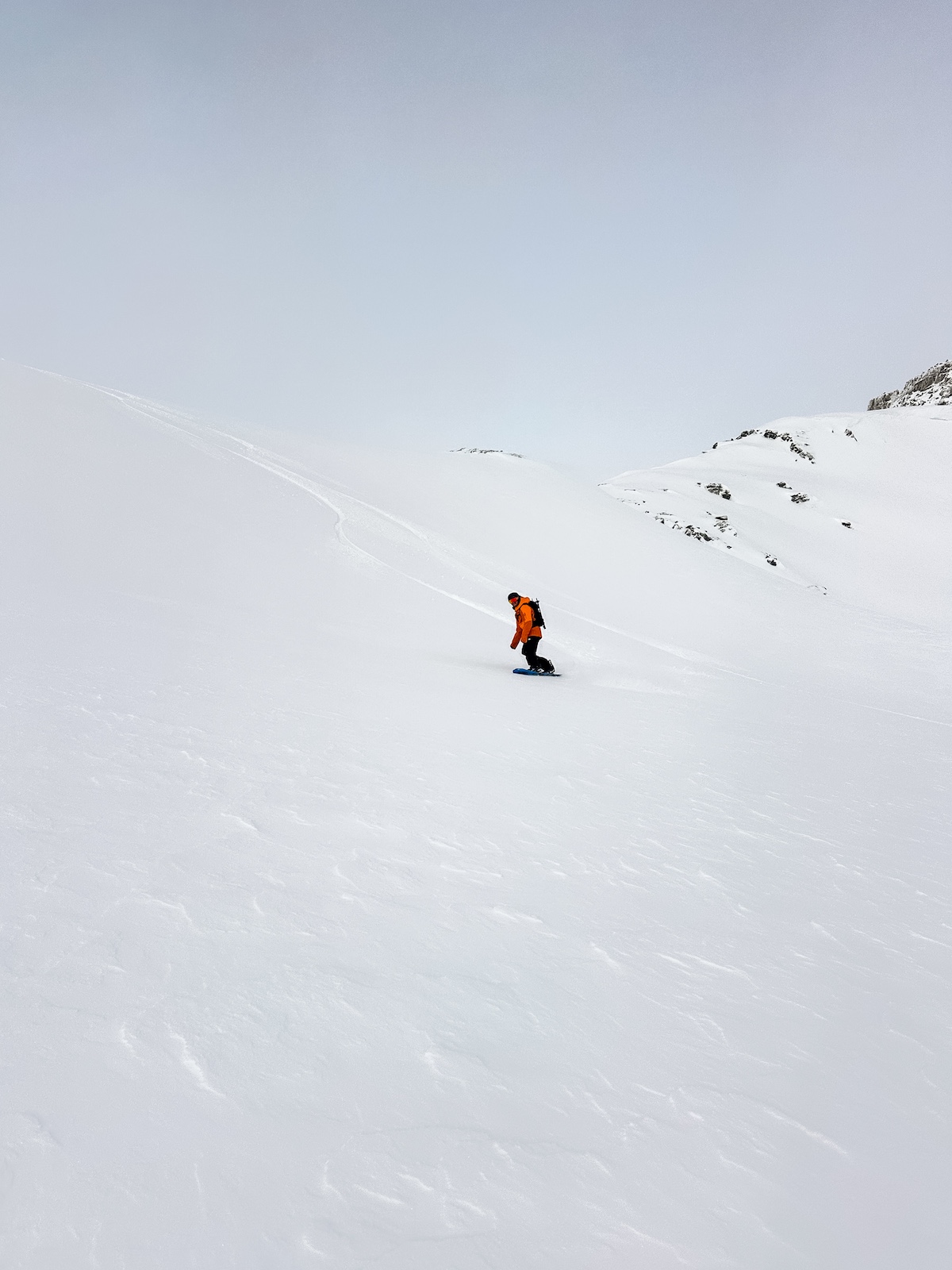
With snow like that, the next few days were already decided. Sunshine Village was first. It was Scott’s first time there, and it became his favourite resort day of the trip.
The storm had refreshed the mountain without overwhelming it, and the skies had cleared into a bluebird day. Camped nearby, he didn’t have to factor in traffic or crowded parking lots. He woke early, made coffee in the van, and arrived while the lifts were still spinning up for the day.
“My first six or eight runs were basically untouched,” he said.
Sunshine feels expansive, with open alpine terrain and long sightlines stretching deep into the Rockies. That Wednesday, there was no urgency. He dropped in early and kept lapping, stepping straight back onto the lift each time.
“There was barely anyone there,” he said. “I could come down and get right back on the lift.” So he did.
Lake Louise on a Quiet Weekday
Lake Louise carried a similar stillness, but with different character. Where Sunshine feels broad and exposed, Louise feels more layered, with long fall lines, defined bowls, and glades that hold snow well after a storm. On a quiet weekday, it felt spacious in a way that’s hard to come by.
These mountains don’t always feel like this. On peak weekends, the lots fill before sunrise and lift lines wrap around the base. But when your basecamp moves with you, you don’t have to plan around Saturdays.
You wait for Wednesday.
In the Backcountry at Bow Summit
Resort days began to feel like the opening chapter. After Panorama, Mount Washington, and then Revelstoke – briefly “Revelstuck” – Scott felt ready for something deeper. For years, he had considered avalanche training. This time, he had space. When Rogers Pass reopened, he booked his AST 1 in Banff.
Avalanche training changes how you see a mountain. You start thinking about what lies beneath the surface. You begin to understand terrain traps, wind loading, and consequences.
After the course, he headed to Bow Summit along the Icefields Parkway with friends for his first backcountry tour, choosing conservative terrain and a stable weather window. They passed one other group on the skin track, but for most of the day it was just their crew and the sound of their movement through the snow.
“That was probably the highlight,” he said. “First time in the backcountry… using the skills I got from AST 1. It’s on a different level than resort riding.”
The course wasn’t planned months in advance. It happened because the trip had room for it.
.jpg)
Van Rituals That Made It Work
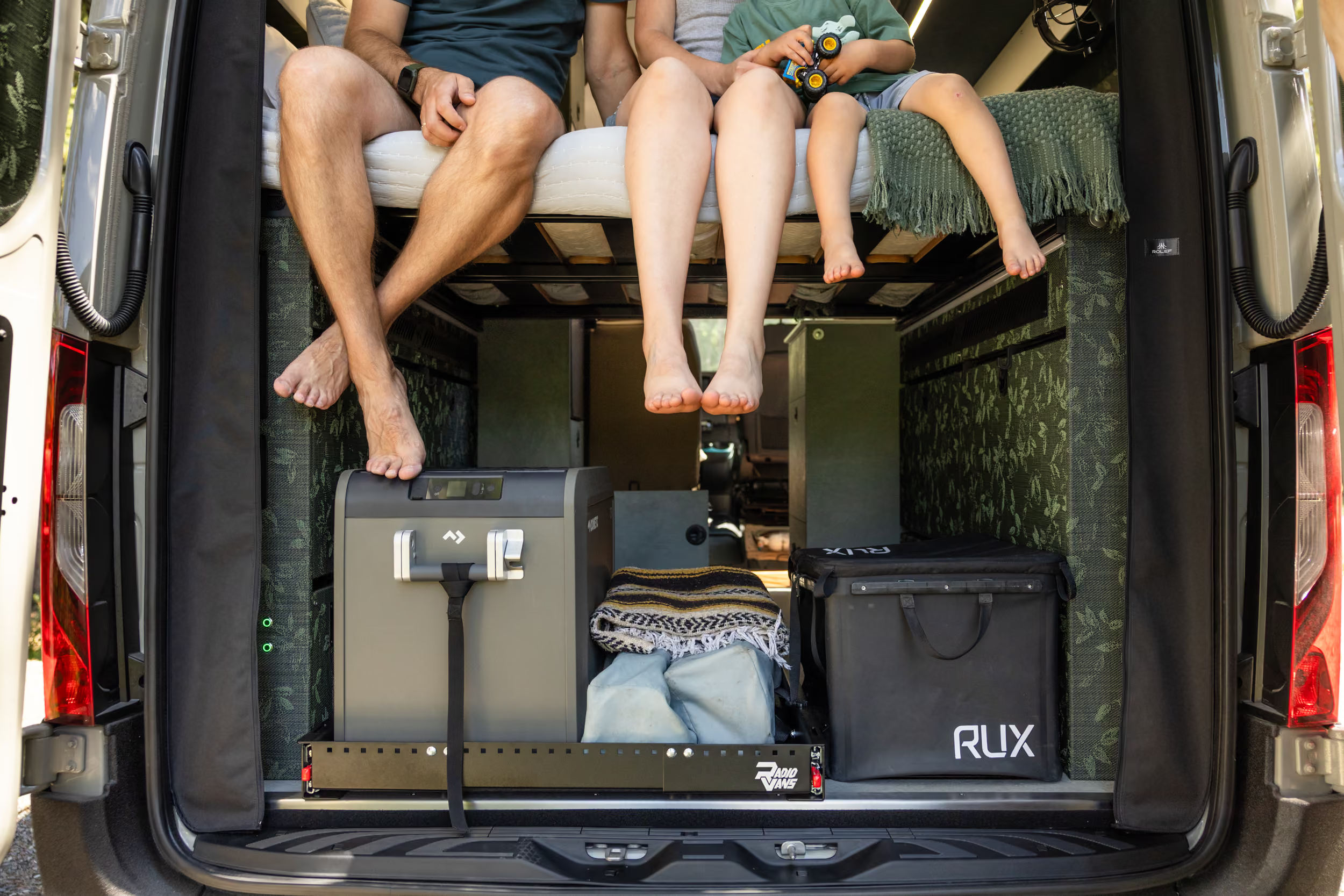
A trip like this isn’t only about where you ride, it’s about how you live in between. This was Scott’s longest consecutive stretch in the van. For that to work, the rhythm had to hold.
He was clear about one thing: the small conveniences matter. “Hands down, the microwave is so nice,” he said. “Everyone questions it… but it’s unbelievably nice.”
In a small space where everything takes a little more effort, anything that reduces friction becomes luxury.
How Do You Live in a Van for Six Weeks During Ski Season?
Six weeks of winter travel in the Canadian Rockies isn’t about hoping for the best. It’s about preparation. Scott kept his winter setup simple, but deliberate.
Van Setup for Sub-Zero Winter Travel
- Thermal cab curtain for sustained sub-zero temperatures
- Upgraded fog lights for whiteouts and mountain passes
- Onboard air compressor for adjusting tire pressure in changing conditions
Essential Gear for a Ski Road Trip
- Snowboard kit ready for resort days
- Touring skis and skins for backcountry travel
- Beacon, shovel, and probe
- Cameras charged and organized
- Stocked pantry, fridge, and freezer with easy meals
Nothing excessive. Just the kind of preparation that lets you follow the weather instead of fighting it. Preparation was part of what made the freedom possible.
And when you’re ready for winter, you stop planning around it, and start moving with it.
.avif)
Rebecca Casey
Marketing & Events Specialist at Yama Vans


.avif)