Adventure Van FAQs for Couples: Questions We Hear Most at Yama Vans
June 30, 2026
/
Rebecca Casey
.png)
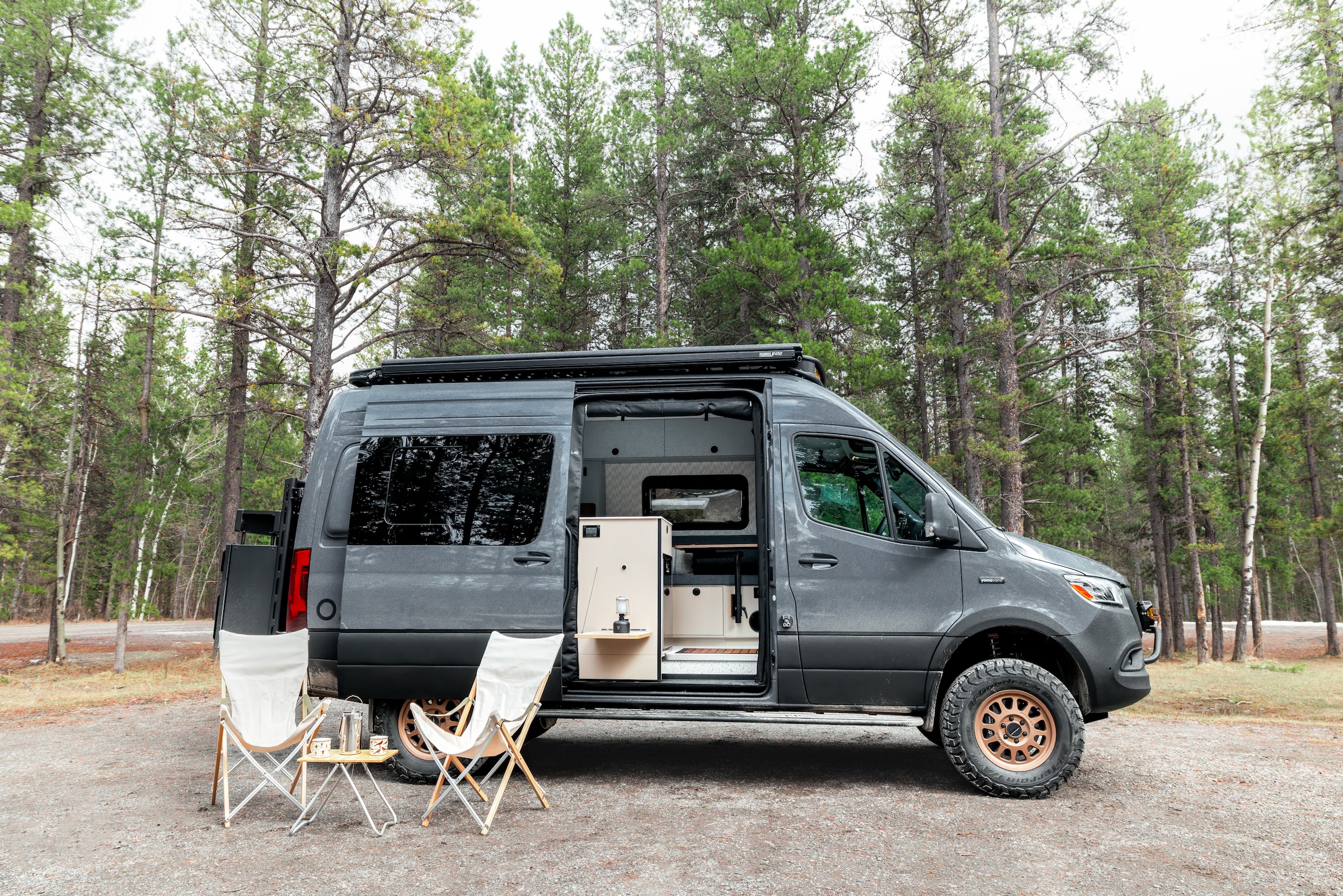
At Yama Vans, we build adventure vans for couples who are ready to get back out there.
Two people, a lot of gear, and with the house a little quieter these days, finally the time to use it.
If you’ve been trying to figure out which one that is, you’re not alone – most couples in this chapter have been researching for years before they reach out. You’ve probably been to the shows, read the forums, watched more walkthroughs than you’d like to admit. The questions tend to multiply the deeper you go.
The good news: the questions we hear are more consistent than you might think. Chances are, if it’s on your mind, someone else has already asked it – probably last Tuesday. Here are the ones we hear most, answered honestly, in one place.
The Lifestyle Stuff
How big is the bed? I’m 6’2” – am I actually going to fit? Can two people fit comfortably?
Yes – every Yama Van includes an RV queen bed, and most models sleep two adults comfortably up to 6’2”.
The RV queen is the same width as a standard queen and a few inches shorter in length. In all models besides the Blanca01N, it sits in a crosswise, east to west layout, with extended flares at the head and foot for added length and comfort.
If you’re over 6’2”, the Blanca01N is worth a closer look. It sleeps two up to 6’4” in a lengthwise, north to south layout – extra length for the taller half of the couple, and no climbing over each other to get in and out.
.png)
We travel with our dog. Where does she sit, where does she sleep, and will she be comfortable?
Yes – dogs travel comfortably in a Yama Van. Many of our clients bring theirs along, and some even choose their model with their dog’s comfort and safety in mind.
During drives, dogs typically ride on the bench seat, lounge on the floor of the living area with a dog bed, or rest in a secured crate in the gear garage – and many sleep in these same spots, too. Clients with dogs often opt for the Teton01N, which has a designated rear seat that converts to a bed, giving them a spot to settle or click in with a seatbelt. In the Blanca01N, the lengthwise layout leaves room at the foot of the bed for them to curl up with the shorter half of the couple.
For days when your pup has to wait back at the van, our efficient, 12V off-grid air conditioning upgrade runs without a hookup, so they’ll be cool and comfortable while you’re out. And for days when they join you, the outdoor washdown station means they’re clean before they come back inside.
Can we add a shower? What about a toilet? What kind is it and how does it actually work?
Yes to both – every Signature Model – our fully-equipped builds with kitchens, bathroom facilities, and dedicated gear garages for an active lifestyle – includes a cassette toilet and outdoor washdown station, with options to add an interior shower.
A cassette toilet is a self-contained unit with a removable waste tank that slides out for easy emptying at any dump station or designated facility. It’s simple, clean, and surprisingly unintimidating once you’ve used one.
The outdoor washdown station handles the post-trail rinse, the muddy dog, and the bike cleanup. If you want to bring the shower inside, our in-floor upgrade includes a recessed pan that drains into your grey tank, a wooden boardwalk platform, and a handheld fixture that tucks neatly away when not in use – and doubles as a spot to drip dry wet boots.
If you’re looking for a more traditional, full-height wetroom, stay tuned – something exciting is coming soon.
.png)
Do you offer Starlink? Can we actually work from the van?
Yes – Starlink is available as an add-on, and people genuinely work from their Yama Vans.
Our Starlink Gen 3 package includes the dish, all accessories, and a quick-release mounting system that attaches directly to your Yama roof rack. It works virtually anywhere with an open view of the sky, including places where cell service gives up entirely.
For most couples in this chapter, Starlink is less about working full-time from the road, and more about removing the reason to head home early. Clear your inbox over morning coffee, get a few turns before lunch, take a Zoom call at the base, back on the hill by one.
We have a ton of gear. How many bikes can we fit? Where do our skis go?
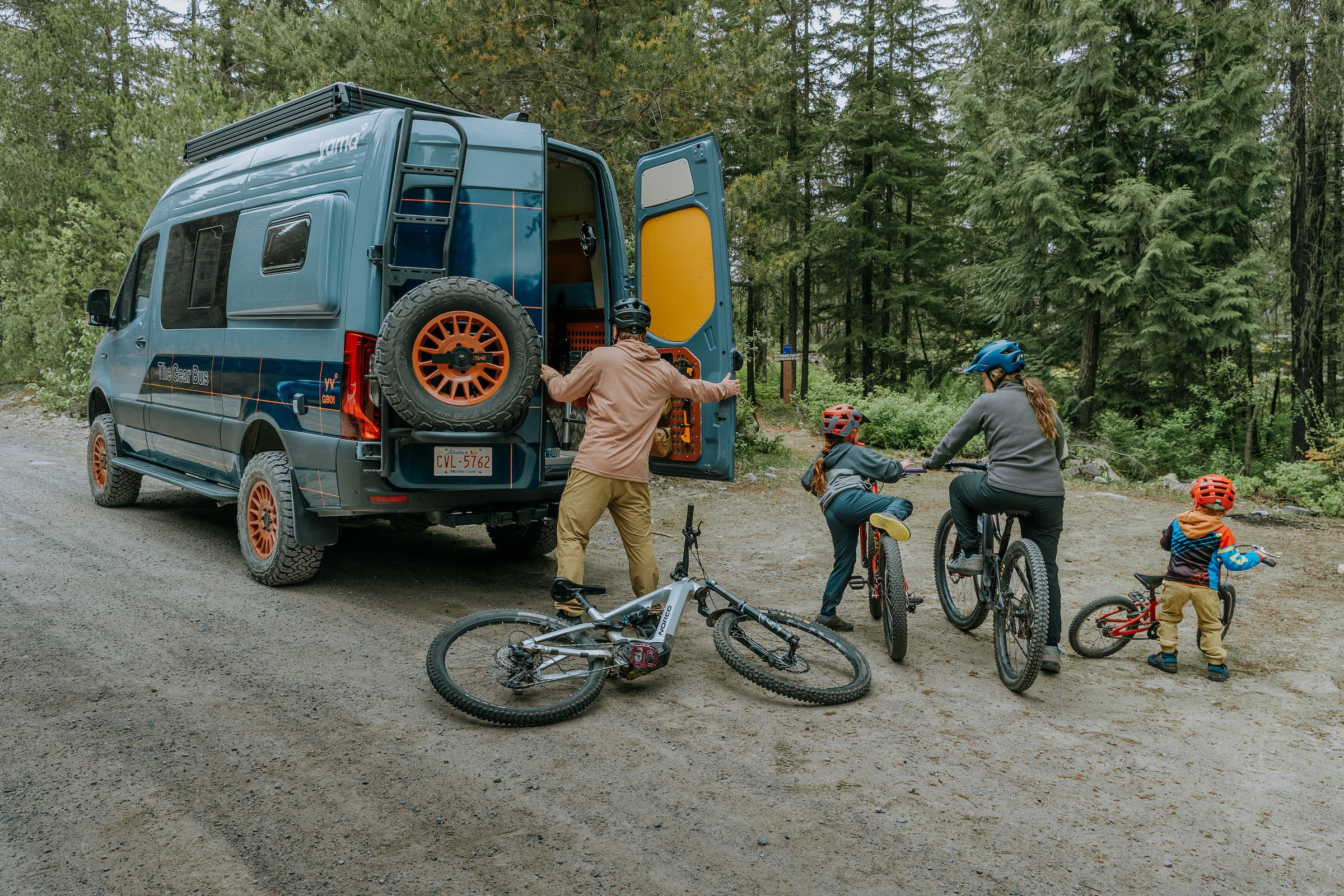
All Yama Vans are designed for serious gear loads. Every model includes a dedicated gear garage ranging from 85-100 ft³.
Up to four bikes fit inside with the front wheel off, secured via fork mount – though fitting four does depend on your drop bar to flat bar ratio and bike sizes. Either way, they’re inside, out of sight, and protected from highway damage. If you’d prefer to keep them outside, exterior bike rack options are available as an upgrade.
Skis fit vertically in the gear garage or if you’d rather keep the wet and slush out entirely, a dedicated ski locker mounted to the rear door is available to add on. You never have to choose between sports – bikes, skis, and the rest of your gear can live in the van at the same time.
.png)
The Systems Stuff
How long do the batteries last? How long can I go off-grid? Do we have to plug in? Is solar enough?
All Signature Models – our fully-equipped builds with kitchens, bathroom facilities, and dedicated gear garages for an active lifestyle – are built to run 2+ weeks off-grid with typical use and regular driving, no hookup required.
Three charging sources keep you powered: a high-output secondary alternator dedicated to charging the house batteries while you drive, 200W of rooftop solar, and a marine-grade shore input for when you’re back on grid.
The alternator is your most reliable source on the road – a normal day of driving replenishes most of what you used the night before. Solar is a helpful top-up on sunny days parked at camp, though less reliable in overcast conditions. Shore power is primarily used at home between trips to make sure you leave fully charged.
Is it genuinely 4-season? Can we actually take it out in February in the Rockies? What temperatures can I use the van in?
Yes – every Yama Van Signature Model is built for frigid Canadian winters, with premium insulation and a hydronic heating system standard across the lineup. Most of our clients are in Alberta and BC, so cold-weather performance isn't an afterthought, it's the baseline. We rate our vans to -15°C, though many clients have taken them out well below that with some adjusted operating procedures in extreme conditions.
Our Signature 21k BTU hydronic heating system delivers heat through cabin air, on-demand hot water, and radiant in-floor warmth – running quietly and efficiently in the coldest conditions. The fresh water tank and house batteries are also insulated and heated to keep your systems running when the temperature drops.
All Signature Models include insulated window coverings to keep warmth in. If you’re planning to ski all winter, we’d recommend adding an insulated cab curtain for even better heat retention between the cab and the living area – it keeps the heat where you need it most. No missing first chair because you were too cold to get out of bed.
.png)
The Sprinter Stuff
Is the Sprinter hard to drive? How does it handle in winter conditions?
No – and most people are surprised by how easy it is. The power steering is responsive, the handling is confident, and the 360° parking camera makes tight spots a breeze. Folks tend to find it intuitive after the first trip out.
The Sprinter is roughly the same width as a full-size pickup truck. A few small adjustments to expect: more stopping distance, a wider turning radius, and a new awareness of height – low-hanging trees, drive-throughs, parkades. Nothing that takes long to get used to.
The stock Sprinter isn’t optimized for the full weight of a build, which is why upgraded suspension comes standard on every Yama Van – smoothing out the ride on and off the road. For those who want to push further, brake upgrades, throttle tuners, and performance shocks are available as add-ons.
At Yama, we only spec the AWD platform to ensure every van is capable in all conditions. In winter, the AWD system distributes engine power to all four wheels for maximum traction on snow and ice. All-terrain, all-weather tires keep you planted firmly on the road. You won’t be white-knuckling it to the mountain.
What's the difference between the 144" and 170" wheelbase – how do we know which is right for us?
The main difference is size and intended use – the 144” measures 19’6” and is best suited for those who want maximum maneuverability on and off road, while the 170” measures 23’ and offers more interior space and added amenities for longer trips.
The 144” is where most couples land. It handles city driving comfortably and fits in a standard parking spot, while also navigating backcountry roads and tight FSRs without issue – for those who want to move seamlessly between both, it’s the clear choice.
The 170” is for those who want to spread out. More space, more storage, more amenities – you’ll feel the difference on longer stints and cross-country trips. It’s slightly less maneuverable, but for extended travel where comfort is the priority, the tradeoff may be worth it.
.png)
Can we take it off-road? What kind of terrain can it actually handle?
Yes – every Yama Van is capable well beyond the pavement.
Every Signature Model comes standard with Agile Offroad’s RIP Kit – a suspension upgrade purpose-built to smooth out rough roads, reduce sway, and boost off-road capability without sacrificing on-road comfort. From there, additional suspension packages, air lockers, winches, and air compressors are available to add on if you want to push even further into the backcountry.
We’ve taken them off-roading from the Southern California desert to the rugged Canadian Rockies. The capability is there from day one – and if you want to build the confidence to match, our annual Intro to Off-Roading course is designed for exactly that.
The Practical Stuff
What does a Yama Van actually cost – and why is a custom Sprinter conversion so expensive?
Pricing starts at $103,000 CAD for a Gear Bus™ — Yama's modular, minimalist build optimized for hauling more gear and people — and between $209,000 and $243,000 CAD for our Signature Models, which add kitchens, bathroom facilities, and dedicated gear garages for off-grid, active-lifestyle travel.
The price reflects what goes into them. These are professionally engineered, custom-manufactured, 4-season off-grid vehicles – fully equipped with kitchens, water systems, and advanced power and comfort features. We use marine-grade materials and components not commonly found in traditional RVs, and we build to a significantly higher manufacturing standard.
That standard extends beyond the build itself. Every Yama Van comes backed by comprehensive self-serve resources, a dedicated service team who knows your build inside and out, and an owner community that makes the whole experience that much better. You’re supported long after you leave the lot.
That standard is also backed by credentials that matter: we’re Western Canada’s only Transport Canada-certified Class B RV manufacturer, a Mercedes-Benz Expert Upfitter, APEGA Permit to Practice holders, and AMVIC licensed.
Do we need to bring you a van, or do you source it for us?
We facilitate the entire process to ensure every build starts on the right foundation – you don’t need to source anything on your own.
Yama requires a “Yama-Spec” Sprinter – a chassis configured with the specifications our builds demand. You purchase the van directly from Mercedes, while we manage the coordination, logistics, and secure storage at Yama HQ until your build begins.
How much can we customize?
Every Yama Van starts with one of five off-grid models, pre-engineered for safety, reliability, and serviceability, then gets personalized with 30+ functional upgrades and 100+ finish options to make it uniquely yours.
What will we be able to sell this for when we’re done? How does depreciation work?
Like any vehicle, a Yama Van sees its steepest depreciation when it’s driven off the lot. On average to date, Yama Vans depreciate 8-12% annually, though resale value depends on age, mileage, and condition. When that time comes, our Pre-Loved Program means you’re not navigating the process alone.
The Pre-Loved Program is Yama’s resale service for owners who are ready to move on to their next adventure. We take the hassle out of selling by marketing your van through our own channels, vetting prospective buyers, and connecting you directly – so you’re not fielding calls from tirekickers.
If you’re still working through how a Yama Van might fit your specific chapter, that’s exactly what our Intro Calls are for – an honest conversation with someone who knows these vans inside and out.
.jpeg)
Rebecca Casey
Marketing & Events Specialist at Yama Vans


.png)